On this page13 sections
Step 1: Stop, breathe, and check for injuries
Stop your vehicle. Take a breath. Check yourself, then your passengers, for injuries. Adrenaline hides pain — assume any neck, back, or head impact is real and worth medical evaluation, even if you feel fine at the scene.
Step 2: Move to safety, if you can
If the vehicles are drivable and there are no injuries, move them out of the travel lane — onto the shoulder or into a parking lot. Maryland law allows (and encourages) moving drivable vehicles out of traffic. Turn on hazards. If you carry road flares or triangles, use them.
If a vehicle isn't drivable, leave it where it is, get yourself behind a guardrail or off the roadway, and wait for police.
Step 3: Call 911
For any accident involving injury, blocked traffic, or significant damage — call 911. In Maryland you're required to report accidents involving injury, death, or vehicles that can't be moved safely. Even for minor accidents, a police report is the strongest piece of documentation you can have for a later insurance dispute.
Step 4: Exchange information — but don't admit fault
Get from each other driver:
- Full name, address, phone, and email
- Driver's license number and state
- License plate, make, model, color of vehicle
- Insurance company name, policy number, and agent phone if available
- Names and contact info for any passengers
Keep your conversation factual. Don't apologize. Don't speculate about who's at fault. Don't discuss injuries. "I'm glad everyone is okay — let's exchange info" is enough.
Step 5: Document the scene with photos
Pull out your phone and document everything before vehicles move:
- Wide shots of the full scene from at least four angles
- Close-ups of every area of damage on both vehicles
- License plates and VINs
- The other driver's insurance card and driver's license (front and back)
- Road conditions, skid marks, debris, traffic signs and signals
- Any visible injuries
- The names and badge numbers of responding officers
Look for witnesses and get their names and phone numbers. Witness statements get dramatically harder to obtain after people drive away.
Step 6: Get the police report number
Before the officer leaves, ask for the police report number (sometimes called a CR or case number) and instructions on how to obtain a copy. In most Maryland jurisdictions, reports become available 7–10 days after the accident through the responding agency.
Step 7: Get the vehicle off the road safely
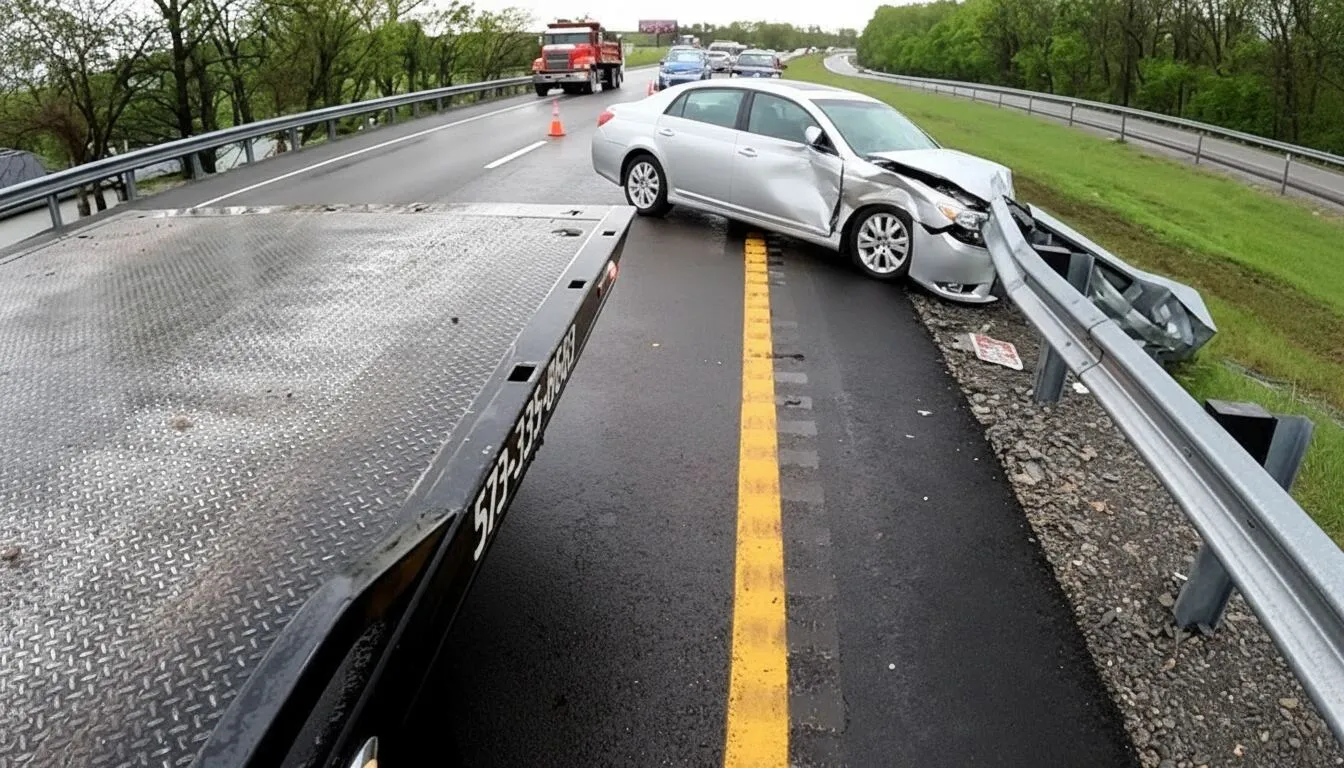
If your car isn't safe to drive — fluid leaks, airbag deployment, wheel or tire damage, bent body panels rubbing on tires, dash warning lights, or anything structural — get it towed. Trying to limp a structurally damaged vehicle home can turn a $4,000 repair into a $14,000 one.
Eastern Auto Works runs 24-hour towing across the Eastern Shore at (443) 577-4032. If your insurer prefers to arrange the tow, that's fine — but pick the destination yourself. You can have it towed to any shop you choose, including ours.
Step 8: Notify your insurance company
Call your insurer as soon as you're safe. Most have 24-hour claim lines. You'll need:
- Date, time, and location of the accident
- Other driver and insurance info
- The police report number
- A brief factual description of what happened
Stick to facts. Don't speculate. If the other driver is at fault, you can also file a third-party claim directly with their insurer.
Step 9: Choose your own body shop
The insurance company will recommend a shop in their Direct Repair Program. You don't have to use it. You have the legal right to take your vehicle to any licensed body shop in Maryland — see our full guide on your right to choose a body shop.
Step 10: Get a written estimate and start the repair
A reputable shop provides a written estimate at no cost, handles insurance supplements directly with the adjuster, and backs the work with a warranty. Eastern Auto Works offers free written estimates, works with every major insurance company, and provides a lifetime warranty on its paint and workmanship for as long as you own your vehicle.
Step 11: See a doctor — even if you feel fine
Whiplash and soft-tissue injuries often don't show symptoms for 24–72 hours. A baseline medical evaluation protects both your health and any future injury claim.
One more thing: keep a copy of everything
Save the police report, your photos, the claim number, the other driver's info, and every email or letter from any insurer in one folder. Insurance disputes can drag out for months; having organized documentation makes a real difference.
If your accident happened on the Eastern Shore and you need help right now, call us at (443) 521-9655 or start a repair request online.